Guide · 29 October 2026 · 4 min read
Egg codes explained: what 0, 1, 2 and 3 actually mean
Part of the guide: Buying food direct from farms: the complete guide
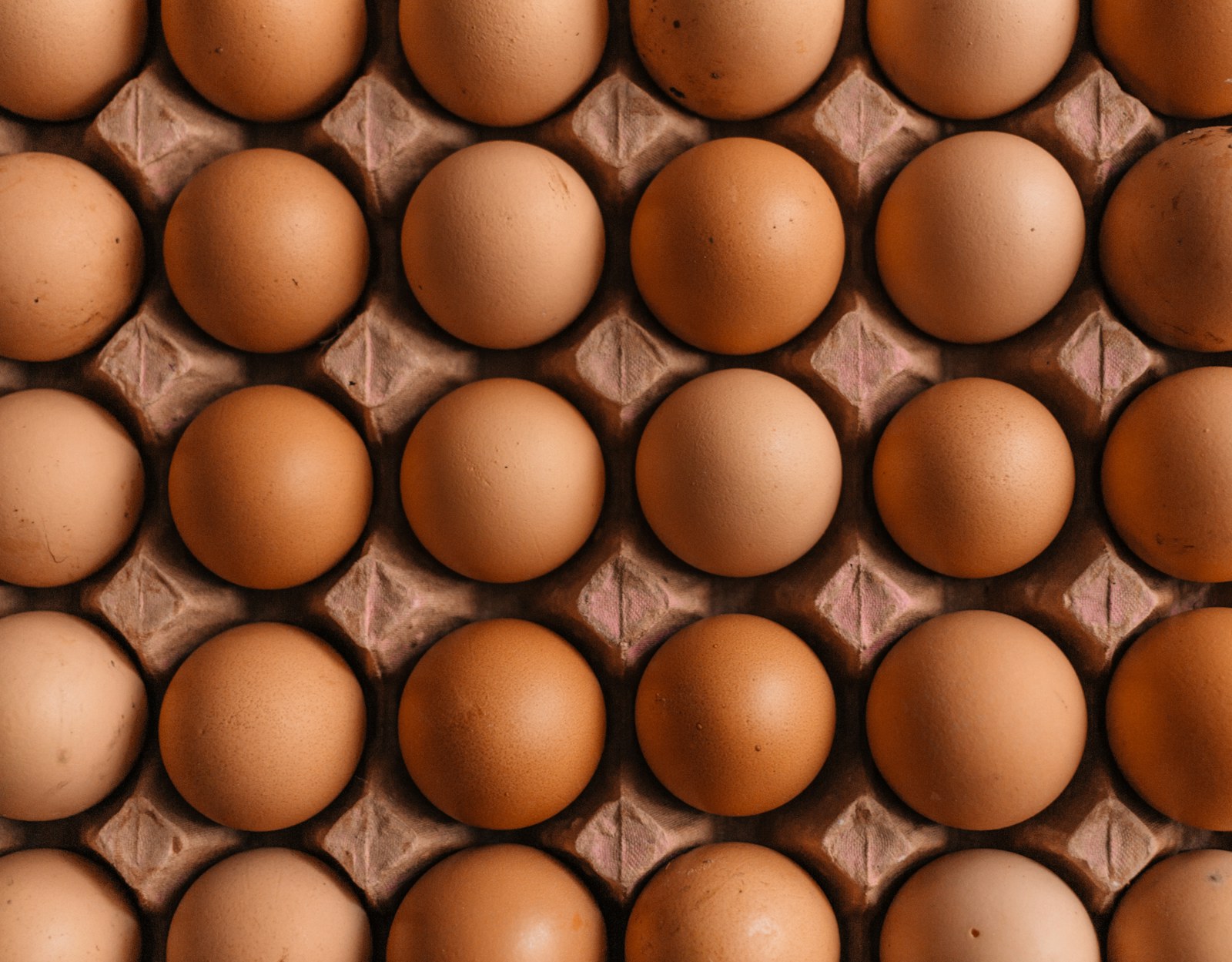
Every egg sold in the EU carries a stamp, and the first character of it is the only part that is actually regulated: a single digit — 0, 1, 2 or 3 — that states the hens' housing system under law, followed by a country code and a number that identifies the exact farm. It is one of the most specific pieces of food labelling most people never learn to read, and it tells you less than the stamp's confident look suggests.
What the digit actually certifies
Under Regulation (EC) No 589/2008, which sets the EU's egg marketing standards and producer coding, the first digit means: 0 organic, 1 free-range, 2 barn, 3 caged. The two letters after it are the country of origin, and the final digits identify the specific production site — the same code that lets an inspector trace a carton back to one farm.
What each number requires in practice
Conventional battery cages have been banned in the EU since 1 January 2012; a code 3 today means an enriched cage, with a legal minimum of 750 cm² per hen — 600 cm² of it usable — a cage at least 20 cm high, a nest, litter to peck and scratch at, and a perch giving each hen at least 15 cm (Directive 1999/74/EC). A code 2, barn, removes the cage: hens move freely indoors, at no more than 9 per square metre of usable area, with at least one nest for every seven hens. A code 1, free-range, keeps the barn conditions and adds continuous daytime access to an outdoor run. A code 0, organic, builds on free-range housing with organic-certified feed and the wider rules in Regulation (EU) 2018/848.
What the code doesn't tell you
The digit states a legal category, not a farm's actual practice above that minimum. Two free-range flocks can both be genuinely code 1 while one keeps hens on open pasture most of the day and the other opens a small run that few birds bother using — the code does not distinguish between them, because it was never designed to. It also says nothing about breed, exact diet beyond the category's rules, flock size, or how long the hens have been laying. None of that is hidden on purpose; it is simply outside what the stamp is required to say.
Where GetEats fits
GetEats is a directory and marketplace of named farms, not a certification body: we do not audit or verify any producer's egg code, and the code itself remains the legal source to check. What a named farm's own page can add is everything the stamp leaves out — ask directly about the breed, the actual time spent outdoors, what they are fed beyond the legal minimum, and how the flock is kept. Browse the egg category to see producers by name, and how to check where your food really comes from covers the same question for every other category.
Frequently asked questions
What does the number on an egg actually mean?
It states the hens' legal housing system: 0 is organic, 1 is free-range, 2 is barn, 3 is caged, under Regulation (EC) No 589/2008. The letters after it are the country of origin, and the remaining digits identify the specific farm.
Are caged eggs still legal in the EU?
Yes, but not in the old battery-cage form — those were banned on 1 January 2012. A code 3 egg today comes from an enriched cage, with a legal minimum of 750 cm² of space per hen, a nest, litter and a perch, under Directive 1999/74/EC.
What's the actual difference between barn, free-range and organic?
Barn (code 2) means no cage, indoors, at most 9 hens per square metre. Free-range (code 1) keeps those conditions and adds continuous daytime access to an outdoor run. Organic (code 0) keeps free-range housing and adds organic-certified feed and the wider rules in Regulation (EU) 2018/848 — each category builds on the one below it rather than replacing it.
Does the code tell you anything about a specific farm's actual practices?
Only the legal minimum for its category, not how a farm actually operates above that minimum — two free-range flocks can meet the same code very differently. Breed, exact diet, flock size and how much a flock actually uses its outdoor access are not part of what the stamp certifies, which is where asking a named producer directly fills the gap.