Guide · 11 August 2026 · 6 min read
Buying food direct from farms: the complete guide
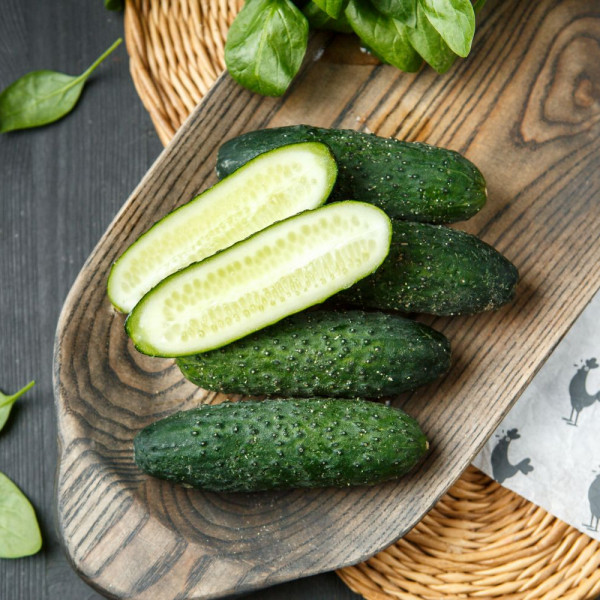
Buying food direct from farms means ordering from the people who actually made it — the dairy, the market garden, the baker — and having it packed for your delivery day instead of pulled off a shelf. This guide is the map of how that works: the mechanics of an order, what you can buy, what it costs, who is on the other end, and what to put in a first basket.
How does ordering direct from a farm work?
You fill one basket from as many producers as you like and pick a delivery day. At checkout the basket is split into a separate order for each farm, because every farm packs and sends its own part — usually the evening before your slot. On the day a courier brings it in a two-hour window and messages you shortly before arriving.
That mechanism explains most of what follows. Nothing sits in a warehouse waiting for demand: your order is the reason the food gets picked, so the chain runs backwards from your delivery day rather than forwards from a stock forecast. Farm to table in a day follows a single order through it, step by step.
What can you buy direct from farms?
Considerably more than a vegetable box — and how a marketplace compares with a veg box or a CSA share is worth reading before you choose between them, and how to check where your food really comes from explains why a named grower is worth anything at all. The market is organised around what small producers actually make:
- Dairy — milk, butter, cream and curd from named dairies, often unhomogenised.
- Cheese — farmhouse rounds and fresh cheeses; the guide to farmhouse cheese walks through the styles.
- Eggs — the category where a single day of freshness is most obvious.
- Vegetables and fruit — picked to order and rotated with the season.
- Bakery — bread baked to the delivery schedule rather than to a shelf life.
Ranges move through the year. A producer's list getting shorter in February is a sign the food is real, not that something has gone wrong. Meat, poultry and fish are not on the list at all while the pilot runs: the courier has no cold chain, so we only take food that survives the trip in a box.
What does "direct from farms" not mean?
Four things it is worth being clear about, because they are the assumptions that disappoint people:
- It does not automatically mean organic. Direct describes the chain; organic is a certification about the method. Many small farms work organically without paying to certify, so read the producer's own description.
- It does not mean instant delivery. You choose a day because the food is gathered for that day. Same-hour dispatch would require exactly the warehouse this model removes.
- It does not mean a fixed box or a subscription. You pick individual products from individual farms, whenever you want them.
- It does not mean everything is available all year. A real farm has a season; a permanently complete range is a sign of long-term storage somewhere.
Nor does it mean the same thing as "local". Distance has its own vocabulary, and in Italy it is a legal one: food at km 0 has to be produced within 70 km of the point of sale, which is a narrower claim than buying direct and worth keeping separate from it.
Does it cost more than a supermarket?
Sometimes the sticker price is higher, and the honest reason is scale: careful production without industrial cost-cutting costs more per kilo. But the comparison is rarely like-for-like. Food that arrives days fresher gives you more usable days before it turns, richer food goes further per portion, and most producers deliver free once your order with them passes their own threshold — which closes a good part of the gap for a real weekly shop.
The full case, including what the money does at the other end of the chain, is in why buy food directly from farms.
How do you shop so it actually pays off?
Buy what is in season. Seasonal produce is cheaper, better and needs no intervention to arrive in good condition, because it never had to be picked unripe to survive a journey. Eating with the seasons is a rough calendar to shop from, month by month.
Put it away properly when it lands. Farm food usually arrives without the packaging and treatments that stretch supermarket shelf life, so where you put it matters more than it used to. Storing fresh farm food covers the fifteen minutes after the courier leaves — the ones that decide whether the last of it is still good on Friday.
Who are you actually buying from?
Every product belongs to a producer with their own storefront: their story, their range, their prices. Nobody buys their food and re-brands it, which is why two farms can price the same product differently — you are seeing each business's own economics rather than a category price set by a retailer.
You can browse producers by location on the farm map, and meet the makers explains what a farm's page can tell you before you order. Producers register with their business details and their storefront is reviewed before it goes live, so nothing on the market is anonymous.
What should a first order look like?
Start where the difference is loudest instead of replacing a whole weekly shop on day one:
- Eggs, leaves and bread — the three things where a day old and a week old are simply not the same food.
- One dairy product you already buy often, so you have a fair comparison at home.
- Whatever the market is showing in season that week.
Order from one or two farms rather than eight: delivery is worked out per producer, so a concentrated basket often travels free while a scattered one collects several charges. Browse what is available near you, and let the first delivery decide the rest.
Frequently asked questions
What is the difference between a farm marketplace and a veg-box scheme?
A box scheme decides the contents and usually bills you on a recurring basis. A marketplace lets you choose individual products from several named farms and order only when you want to, so you control both the basket and the rhythm — at the cost of doing the choosing yourself.
Which farms can actually deliver to me?
The market shows the producers who deliver in your country, so the shelf you see depends on where you are. If we have not opened in your country yet you will see our flagship market instead, which is worth a look but cannot be delivered to your door.
Is food that comes straight from a farm safe?
Producers selling here operate under the same food-safety rules as any other food business, and each product is tied to a named, registered business rather than an anonymous label. That traceability is the point: if something is wrong, there is a specific farm to trace it back to.
Do I need an account before I can order?
No. You can go straight to checkout as a guest and leave an email or a phone number so the farm and the courier can reach you; an account is created from those details so you can follow the order afterwards. Saving an address makes the next order faster, nothing more.