Fruits · 21 July 2026 · 4 min read
Eating with the seasons
Part of the guide: Buying food direct from farms: the complete guide
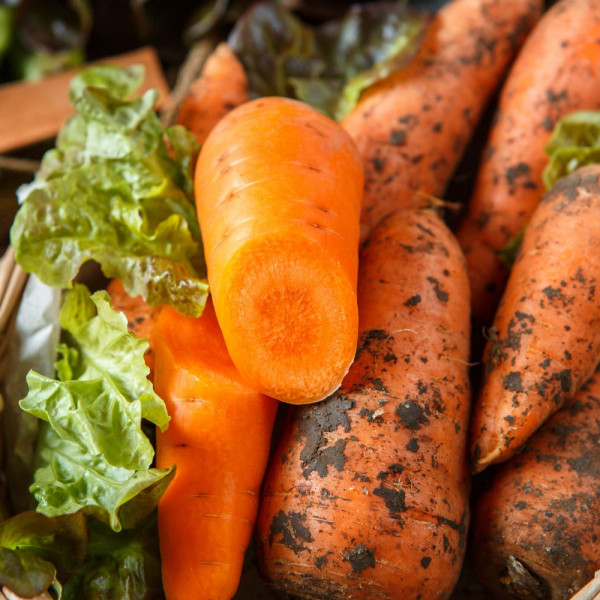
A tomato picked in high summer and a tomato bought in midwinter are, in every way that matters, different foods. One ripened in the sun and was eaten within days; the other was grown under heat and light, picked early, and shipped a long way to arrive looking the part but tasting of very little. Eating with the seasons is simply the habit of choosing the first kind — and it is the easiest way to eat better without spending more.
Why does seasonal food taste so much better?
Flavour develops when a plant is allowed to mature in its natural conditions. Out of season, the same crop has to be forced: grown in heated greenhouses, picked under-ripe so it survives transport, or flown in from the other side of the world. Each of those workarounds trades taste for logistics. In season, none of them is necessary — the crop grows at its own pace, is picked closer to ripe, and reaches you while it still tastes of something.
Is seasonal produce actually cheaper?
Usually, yes — and for a straightforward reason. When a crop is in its natural season it is abundant, so it is at its most affordable at exactly the moment it is at its best. Out of season, scarcity and the cost of forcing or importing it push the price up. Seasonal shopping is one of the rare cases where the tastier choice and the cheaper choice are the same choice. Building your week around what is plentiful right now is a quiet way to eat well on a smaller budget.
How does seasonal eating help the planet?
Buying local and seasonal cuts two things at once: the miles your food travels, and the energy used to grow it outside its natural window. A vegetable in season, grown nearby, needs no heated greenhouse and no long-haul flight. You do not have to track carbon numbers to benefit — "what is growing near me right now?" is a good enough rule, and it happens to be the simplest sustainable decision you can make at the checkout.
A rough guide to the seasons
Exact timing depends on where you live, but the shape of the year is broadly the same across temperate regions:
- Spring — asparagus, radishes, peas, spring greens and the first soft herbs; young cheeses as the herds return to pasture.
- Summer — tomatoes, courgettes, berries, stone fruit and sweetcorn, everything at its ripest and cheapest.
- Autumn — apples, pears, squash, mushrooms and root vegetables; the season for storing and slow cooking.
- Winter — kale and hardy greens, leeks and citrus, plus preserved and aged foods; matured cheeses and cured meats come into their own.
How do you shop seasonally without keeping a calendar?
The easiest method is to let the farms tell you. On GetEats, the "Gathered this morning" shelf follows what partner farms are genuinely bringing in that week, so what you see is, by definition, what is in season near you. You do not have to memorise anything — if it is on the shelf and plentiful, it is in season. Start there, plan a couple of meals around whatever is at its peak, and let the calendar do the choosing.
Seasonal produce is also at its freshest when it travels the shortest distance, which is the whole point of buying directly from farms. Ready to cook by the calendar? See what is in season near you.
Frequently asked questions
How do I know what is in season right now?
The market itself is the simplest signal: what the farms have listed this week is what they are harvesting this week, because nothing is coming out of long-term storage. If a vegetable quietly disappears for a couple of months, that is a season ending rather than a stock problem.
Are frozen and preserved foods still seasonal?
Yes. Freezing, bottling and fermenting move a season forward instead of skipping it, and produce preserved at its peak keeps more flavour than fresh produce that has spent weeks in cold storage. A sauce made from August tomatoes is a more seasonal January meal than a tomato flown in that week.
Does eating seasonally mean giving up the things you like?
It changes when you eat them, not whether. Most people end up eating a wider range across a year, because every month brings something at its peak instead of the same short list on repeat — and what you waited for tastes like an event when it comes back.
Is seasonal always the same as local?
Not automatically: something can be perfectly in season a thousand miles away. What matters for flavour is that it was picked ripe and moved quickly, so seasonal and short-chain together do more than either one on its own.