Cheese · 30 June 2026 · 5 min read
A short guide to farmhouse cheese
Part of the guide: Buying food direct from farms: the complete guide
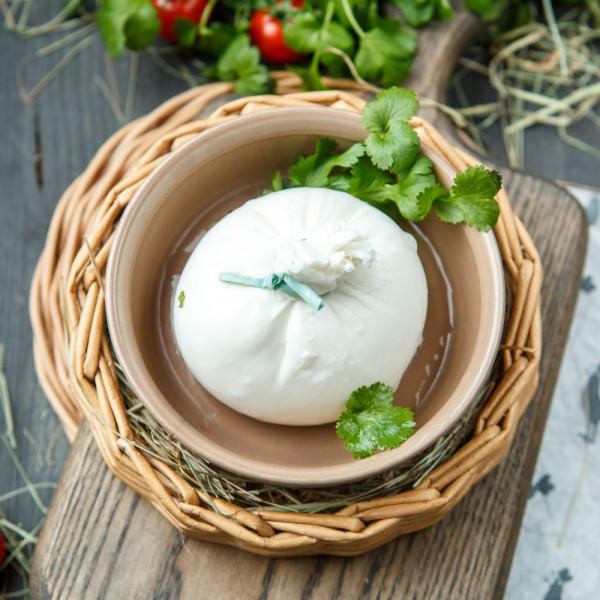
Farmhouse cheese is made in small batches, often from the milk of a single herd, so no two wheels are ever quite identical. That variety is a joy — and, at the cheese counter, occasionally bewildering. Here is a short, practical map of the main families, how to choose between them, and how to serve them so they taste their best.
What makes farmhouse cheese different from supermarket cheese?
Most block cheese is made at industrial scale from pooled, standardised milk, with the goal of tasting exactly the same every time. Farmhouse cheese is the opposite: it reflects a specific herd, a specific pasture and a specific maker's hand, so it changes subtly with the season and the batch. That is not a flaw to be ironed out — it is the reason it tastes of somewhere. Many are made with raw (unpasteurised) milk, which keeps more of the complex flavour that heavy pasteurisation strips away.
Fresh cheeses
These are eaten young — within days — and prize milkiness over intensity. Burrata, mozzarella, stracciatella, ricotta and brined cheeses like brynza and feta all belong here. Because they are delicate, serve them simply: good olive oil, ripe tomatoes, a little salt, some bread. Do not over-chill them, and eat them soon after they arrive — freshness is the entire appeal.
Soft and bloomy-rind cheeses
Brie- and Camembert-style cheeses ripen from the outside in, developing a soft, sometimes runny interior and a mushroomy edge. They are at their best when just ripe — gently yielding to the touch — and, like all cheese, taste far better at room temperature than straight from the fridge.
Hard and matured cheeses
Cheddar, alpine styles like Comté and Gruyère, and aged goudas are matured for months or years. Time concentrates their flavour and often produces the little crunchy crystals that mark a well-aged cheese. These are the most forgiving to store and the most rewarding to bring up to room temperature before eating — cold hides half of what you paid for.
Blue and washed-rind cheeses
The bold end of the counter. Blues are veined with edible mould for a sharp, savoury bite; washed-rind cheeses — the pungent, orange-rinded ones — are the strongest-smelling of all, though often milder in taste than their aroma suggests. Both reward a slower approach: a slice of bread, a spoonful of honey or a little fruit, and a glass of something with body.
How do you build a simple cheese board?
You do not need many. A good rule is three to five cheeses that contrast rather than repeat:
- One fresh or soft — mozzarella, or a young goat's cheese.
- One hard and aged — a mature cheddar or an alpine.
- One bold — a blue or a washed-rind.
Take them all out of the fridge 30 to 60 minutes before serving, give each its own knife, and add bread, fruit and something sweet. That is a board that does justice to what the makers put in.
How do you buy farmhouse cheese well?
Buying well is mostly a matter of two or three questions the dairy can answer instantly. When was it made, and how long has it been cut? A whole wheel keeps for months, but a cut face dries and oxidises in days, so a piece cut this morning is a different cheese from the same piece cut last week. What milk, and was it raw or pasteurised? That one answer explains most of the difference in taste between two cheeses sold under the same name, and it is the thing a supermarket label rarely says plainly. And how much? For cheese eaten as a course of its own, 80 to 100 g a person is generous; on a board of three or four, 50 g of each is plenty. Buying a smaller piece more often beats buying a large one that spends a fortnight in the fridge losing what you paid for — and a farm selling its own cheese will tell you when the next make is due, which is the real advantage of buying from the person who made it.
How should you store and serve it?
Wrap cheese in wax or greaseproof paper rather than cling film so it can breathe, keep it in the least-cold part of the fridge, and always let it warm up before eating. There is more detail in our guide to storing fresh farm food.
Every cheese on GetEats comes from a named creamery you can look up before you buy — part of the case for knowing your makers. Explore the cheese counter and find your next favourite.
Frequently asked questions
Can you eat the rind?
On bloomy-rind and washed-rind cheeses the rind is part of the cheese and meant to be eaten — it carries a lot of the flavour. Wax, cloth and plastic coatings are not. Natural rinds on hard cheeses are edible but often too tough to enjoy, so taste a sliver and decide for yourself.
How much cheese do you need per person?
As a course after a meal, 80–100 g a head across three or four cheeses is generous. If the board is the meal, plan on 150–200 g with bread and something sharp alongside. Buy fewer cheeses in bigger pieces rather than many slivers — they dry out far less.
Why does the same cheese taste different from one batch to the next?
Because the milk changes. Spring grass, winter hay, the stage of lactation and the weather during ageing all leave a mark, and a small maker does not blend batches to flatten those differences out. Variation is what a farmhouse cheese is; consistency is what industrial cheese sells.
What is the difference between raw-milk and pasteurised cheese?
Raw-milk cheese is made from milk that was never heat-treated, so the bacteria native to that farm's milk shape the flavour and it tastes more specific to its place. Pasteurised cheese is milder and more predictable. Both are sold legally and labelled, and the maker states which on the product page.
How much farmhouse cheese should I buy per person?
About 80 to 100 g a person if the cheese is a course of its own, and roughly 50 g of each cheese on a board of three or four. A cut face dries quickly, so a smaller piece bought more often keeps more of what you paid for.