Vegetables · 28 July 2026 · 5 min read
Why buy food directly from farms
Part of the guide: Buying food direct from farms: the complete guide
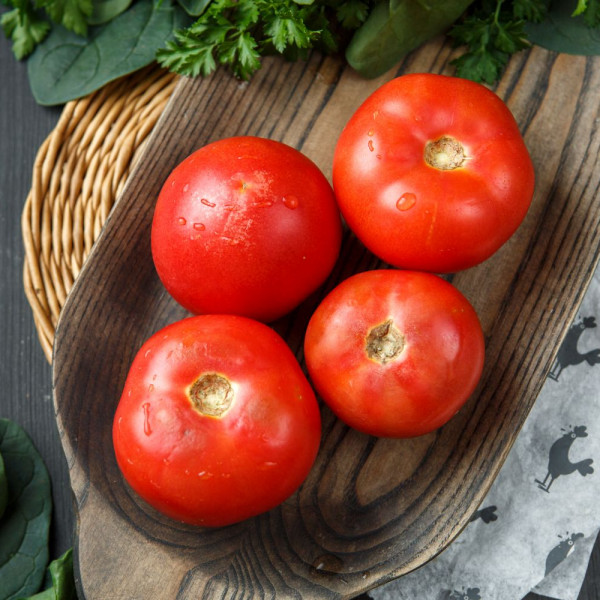
Most food in a supermarket has already travelled a long, invisible journey before it reaches your basket. It moves from the farm to a packing house, then to a regional distribution centre, then to a store's back room, and finally onto a shelf — often over a week or more, passing through several companies that each take a margin and add a little distance from the person who actually grew it. Buying directly from farms collapses that chain to its shortest possible form: grower, then you.
That single change — cutting out the middle — sits behind almost every advantage of a farm market. Here is what it actually means for the food on your table.
What does "buying direct" really mean?
A short supply chain means the person who raised the animal, milked the herd or pulled the carrots from the ground is the same person selling them to you, with no re-packer or wholesaler rebranding the product in between. On GetEats, every item is listed by the farm or workshop that made it, priced by them, and sent to you as they packed it. There is no anonymous "produce of several countries" label, because there is no pooling step where one farm's food becomes indistinguishable from another's.
How much fresher is food that skips the warehouse?
Freshness is mostly a question of time, not distance. Food loses flavour and texture with every day it spends in cold storage, whether that storage is ten miles away or a thousand. The reason direct food tastes better is that it skips the storage step almost entirely: farms pack orders to order, usually the night before delivery, so produce is picked days — not weeks — before you eat it.
In practice that shows up as:
- Vegetables and leaves that are still firm and crisp instead of limp.
- Dairy that tastes of the field rather than of the carton.
- Fruit that ripened on the plant, not in a truck under controlled gas.
It also changes how long food lasts once it is in your kitchen: produce that reaches you days fresher gives you more usable days before it turns. If you want to stretch that even further, see our guide to storing fresh farm food.
Why is buying direct fairer for the people who grow it?
In a conventional chain the farmer is the price-taker at the very start and keeps the smallest share of what you pay, while the margin accumulates with the wholesalers, processors and retailers downstream. Selling direct flips that. Without those layers, a larger part of every sale stays with the grower — which is what makes it viable for a small dairy, a market garden or a family butcher to keep working carefully rather than cutting corners to survive on a supermarket's terms.
That matters to you as well as to them: producers who are paid fairly can afford to prioritise flavour, welfare and soil over pure yield. The quality you taste is downstream of the economics.
Can you actually trust where it came from?
Traceability is the quiet superpower of a farm market. Every product on GetEats is tied to a named maker with their own storefront, so you can see who churned the butter, which farm your eggs came from, and read the producer's own story before you order. If something is labelled organic, raw or pasture-raised, it points back to a specific farm you can look up — not a marketing word on generic packaging.
You can browse producers by location on the farm map, or get to know a few of them in meet the makers.
Does buying direct cost more?
Sometimes the sticker price is higher, and it is worth being honest about why: you are paying for food produced at a smaller scale, to a higher standard, without the cost-cutting that mass production relies on. But the comparison is rarely like-for-like. Direct food tends to be fresher, so less of it is thrown away; it is often more satisfying, so a little goes further; and many partners offer free delivery once your order passes their threshold, which closes much of the gap. For a lot of shoppers the real question is not "is it cheaper?" but "is it better food for roughly the same weekly spend?" — and direct-from-farm usually wins that one.
Where should you start?
You do not have to change how you shop overnight. Pick the one category you care about most — good eggs, proper cheese, real bread — and buy that directly first. Browse what is available near you, and let the difference on the plate decide the rest.
Frequently asked questions
Does buying direct from a farm mean the food is organic?
No — they are separate things. Buying direct tells you who grew the food and how short the chain was; organic is a certification about how it was grown. Plenty of small farms work organically without paying to certify, so read the producer's own description on their storefront instead of looking only for a label.
Can I order from several farms in one basket?
Yes. A basket can hold products from any number of producers, and at checkout it is split into one order per farm — each farm packs and sends its own part. That is also why a single basket can show more than one delivery charge.
How do I know a farm listed here is real?
Every producer registers with their business details and their storefront is reviewed before it goes live, and each one is tied to a named place you can find on the farm map. Nothing is listed anonymously, so there is always a specific farm behind a product.
Do I have to subscribe or buy a fixed box?
No. There is no subscription and no set box: you pick individual products from each producer and order whenever you want. Some farms set a minimum order value for free delivery, and it is shown on their storefront before you pay.