Guide · 18 August 2026 · 10 min read
Selling your own farm produce in Italy: what the rules actually require
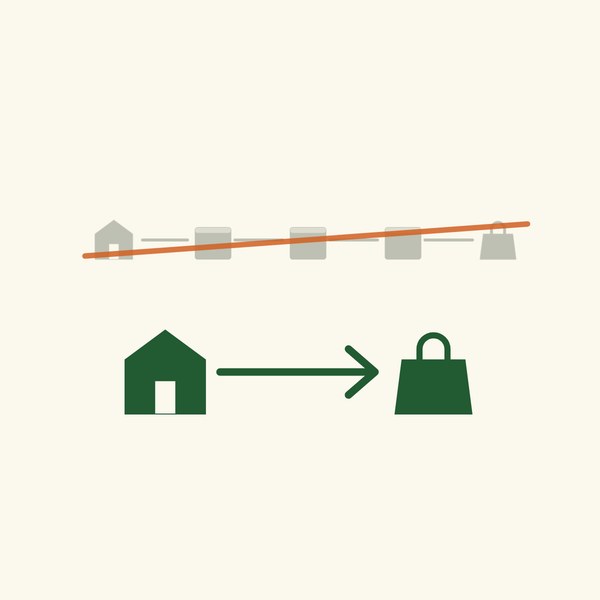
If you grow, raise or make food in Italy, selling it yourself is far less gated than the paperwork stories suggest. There is no shop licence to obtain, no waiting period to sit out, and the online channel is the least regulated of them all. What there is instead is a short list of conditions that decide whether what you are doing counts as direct sale — and a point at which the law stops being national and starts being your comune, your local health authority and your accountant. This guide separates the two.
Who is allowed to sell their own produce direct?
The rule is article 4 of legislative decree 228/2001. Agricultural entrepreneurs, individually or in association, who are registered in the business register may sell at retail anywhere in Italy the products that come prevalently from their own holdings, subject to the hygiene rules in force. Two conditions carry the whole thing: being registered, and prevalence.
Prevalence is the one that gets misread. It does not mean you may sell only your own things — buying in a neighbour's honey to round out a box is normal and lawful. It means your own production has to remain the greater part of what you sell. The law puts a number on the far edge of that, which is further down this page.
Do you have to notify the comune — and wait 30 days?
No, and this is the single most common piece of outdated advice in circulation. Itinerant direct sale requires a communication to the comune where the production holding is based, and since the 2013 amendment the sale may begin from the date the communication is sent. The thirty-day wait was in the original 2001 text and is still repeated in guides written from it. If you are selling from a pitch on public land, the same communication has to include the request for that pitch.
Two cases need no prior communication at all: retail on open areas within the farm itself, and sale at fairs, markets held for religious or commemorative occasions, and similar events. So the farm gate is the easiest place to start, legally speaking, not the hardest.
Selling online: what changes and what does not
Direct sale by electronic commerce may begin at the same moment as the communication is sent to the comune where the production holding is. That makes the online channel the least gated one you have — no queue, no assignment, no pitch.
What does change is consumer law, because you are now selling at a distance to consumers. The information duties come with it, and so does the right of withdrawal — with an exception that happens to describe your entire catalogue: article 59 of the consumer code excludes goods liable to deteriorate or expire rapidly from the withdrawal right. Fresh food is the textbook case. Note carefully what that does not remove: you remain answerable for an order that arrives defective, arrives short, or never arrives at all. It is the fourteen-day change of mind that does not apply, not your responsibility for the goods.
When the health authority has to know
Under article 6 of regulation (EC) 852/2004 a food business has to be registered — in practice a notification filed through the one-stop business portal to the local health authority. Primary production has carve-outs, and they are what most small holdings actually rely on: the regulation does not apply to production for private domestic use, nor to the direct supply of small quantities of primary products to the final consumer or to local retailers supplying the final consumer.
The line is processing, not selling. Your own unprocessed fruit, vegetables, eggs or honey sold in small quantities sits inside the carve-out. Jam, cheese, cured meat, bread and anything else transformed does not: that is a food business and it is registered. One concrete case sits deliberately inside the registration regime — poultry and rabbits slaughtered on the holding, up to 10,000 head a year, sold by the producer directly to the final consumer.
What "small quantities" means is not defined nationally. It is set regionally, which is why two neighbouring farms can be given different answers, and why this is a question for your own health authority rather than for a guide.
VAT number, receipts, and the "without a VAT number" question
This is the most searched question of the whole subject, and the honest answer is short: if the activity is habitual, it is a business, and a business needs a VAT number even in the lightest regime available. Selling a genuine one-off surplus from a kitchen garden is a different situation, and the moment it becomes regular it stops being one.
The lightest regime is the exemption regime of article 34, comma 6 of presidential decree 633/1972. It applies when turnover in the previous year did not exceed €7,000 and at least two thirds of it came from agricultural products in the relevant schedule. Inside it you are relieved of essentially every VAT obligation except keeping your purchase invoices, and for direct sales to private consumers there is no obligation to issue a till receipt. Go over €7,000 and the regime ends from the following calendar year — so it is a starting point, not a destination.
Where direct sale turns into ordinary retail
Here is the number behind "prevalently your own". If revenue from products bought in from third parties exceeds €160,000 in a calendar year for a sole trader, or €4,000,000 for a company, the ordinary retail trade rules apply to the activity. Below that line you are a farmer who also resells a little; above it you are a shop, and the law treats you as one.
One exclusion is worth knowing before you plan anything: direct sale is barred for five years to anyone convicted of offences against food hygiene and health, or of fraud in the supply of food.
What the national rules do not settle
Three honest gaps, and they are where the time actually goes:
- The form of the notification. Whether your comune wants a communication or a full start-of-activity declaration, on which portal, with which annexes, varies locally. The national rule sets the deadline; the municipality sets the form.
- "Small quantities". Regional, as above, and the difference between regions is not small.
- Everything that is not plain selling. Consumption on the premises, farmers' market rules, labelling for processed products and organic certification each have their own rules and their own inspectors.
And none of this is tax or legal advice. An hour with an accountant who works with farms costs less than a first year of getting the regime wrong.
And selling to restaurants and shops?
Direct sale covers professional buyers too, and that is the part which surprises people most often: the same notification to the comune covers delivering to a restaurant, a delicatessen or a small shop, as long as what you sell comes from your own holding. Three practical things change. The paperwork: a private buyer takes a receipt, a business needs an invoice — and with it the payment terms your customer will impose, thirty or sixty days being normal, which belong in the arithmetic before you say yes. The consistency: a kitchen does not buy what happens to be ready, it buys what you promised for Thursday, every Thursday, in the same size. And the price: the professional channel moves quantity below counter prices, so it only pays when the quantity genuinely exists and the delivery does not eat the margin. Plenty of farms run both — what travels well to the restaurants, the rest to the people who eat it — but that is a decision to take with the numbers, not with the enthusiasm of a first order.
Which channel is worth your time?
Five exist, and they are not equivalent. The farm gate costs nothing to start and reaches only people who already drive past. Markets bring footfall and take your Saturdays. Buying groups give you steady volume and set their own terms. Your own online shop gives you the whole margin along with the whole job: traffic, photographs, payments, complaints, couriers. A marketplace starts from demand that already exists and takes a commission for it.
That last one is what we do, so read this part knowing where it comes from. On GetEats every producer has their own storefront, sets their own prices, and packs and sends their own orders — we are the shop window and the checkout, not a reseller who buys your crop and puts its own name on it. There is no exclusivity: the farm gate, the market and your own site keep working. Being straight about our stage: we are early, and we are building the network along the Italian and French coasts first, so what matters is whether there are buyers near you yet.
If that is the channel you want to test, the producer page explains what joining involves, and you can talk to us before you list anything. Two more pages may be useful before you price: what the km 0 label legally means, since it is a claim about the point of sale rather than about your farm, and how buying direct looks from the customer's side — which is, in the end, what you are selling.
Frequently asked questions
Can I sell produce from my own garden without a VAT number?
If the selling is habitual it is a business, and a business needs a VAT number even under the lightest regime — the exemption regime for turnover up to €7,000 relieves you of nearly every VAT duty but not of registering. A genuinely occasional surplus is a different case, and the difference is regularity, so it is worth one question to an accountant before you start.
Do I have to wait 30 days after notifying the comune?
No. Since the 2013 amendment, itinerant direct sale may begin from the date the communication is sent, and sale by electronic commerce may begin at the same moment as sending it. The thirty-day wait belonged to the original 2001 text and survives only in guides copied from it.
Can I also sell products from other farms?
Yes, as long as your own production stays the prevalent part of what you sell. The law draws the outer line in money: once revenue from products bought in from third parties passes €160,000 a year for a sole trader, or €4,000,000 for a company, the ordinary retail trade rules apply to the activity.
Do I need a health registration to sell unprocessed fruit and vegetables?
Direct supply of small quantities of primary products to the final consumer, or to local retailers supplying the final consumer, falls outside regulation 852/2004. Processing does not: jam, cheese or cured meat make you a food business that must be registered. What counts as a small quantity is set regionally, so the binding answer comes from your local health authority.
Can a customer return fresh food bought online?
The right of withdrawal does not cover goods liable to deteriorate or expire rapidly, which is what article 59 of the consumer code says and what fresh food is. It does not release you from anything else: an order that arrives defective, incomplete or not at all is still your responsibility.
Do I need another authorisation to sell to restaurants?
No. Selling your own produce to professional buyers is covered by the same notification to the comune. What changes is the paperwork — an invoice instead of a receipt — and the commercial terms: steady quantities, agreed sizes, and payment at thirty or sixty days.